Solitaire Pal: Big Card
Shoreline Park, Inc.Card
4.81.06K Reviews
- Version
- 1.8.2.20260407
- Installs
- 500.00K
- Age Rating
- Everyone
Screenshots
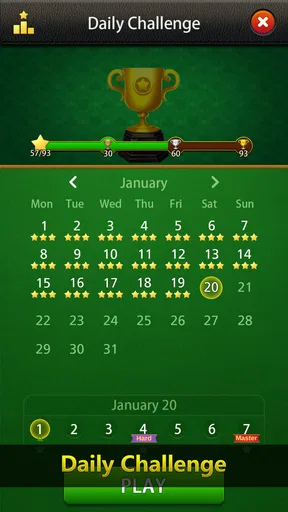
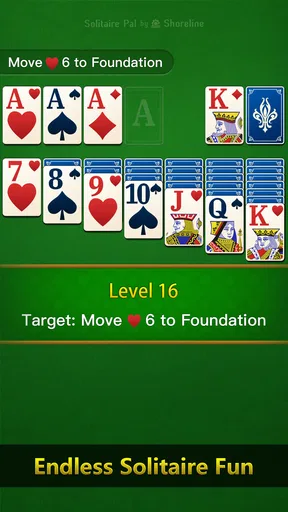
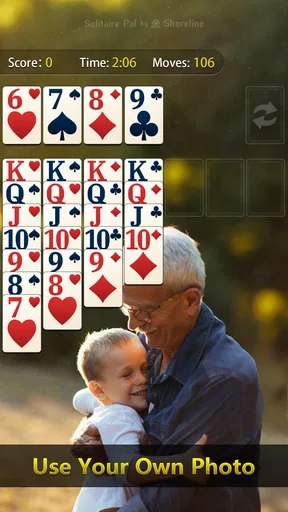
Our Review of Solitaire Pal: Big Card
 Analysis by Appyee
I opened Solitaire Pal: Big Card expecting a straightforward card game, and that is exactly what it aims to be: an approachable Solitaire experience with daily puzzles and a layout designed around easy reading. It is a free card game from Shoreline Park, Inc., available for people who want a quiet few minutes rather than a large, complicated mobile adventure. After spending time with it, I found its appeal less about novelty and more about how comfortably it fits into small breaks.
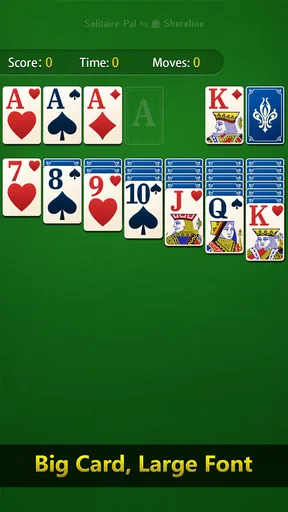
The first thing I noticed was the emphasis suggested by its name. Large cards make the central action easier to follow, especially when I am playing on a smaller phone or when I do not want to squint at tiny symbols. That sounds simple, but card games live or die by readability. When the suits and values are clear, I can think about my next move instead of checking whether I misread a card.
Its average rating sits at 4.8 from around 21 thousand ratings, and the game has passed 500 thousand installs. Those figures do not guarantee that it will suit everyone, but they do match my impression that this is built for a broad audience. The Everyone content rating also makes its presentation easy to recommend in a family setting, provided the person using it already enjoys solitary card play.
A calm card table built for quick sessions
My first impression was deliberately modest. This is not a game that tries to overwhelm me with a dramatic opening, a story campaign, or a crowded menu of competing activities. Its identity is centered on classic Solitaire, with daily puzzles giving the familiar format a reason to return to the table. That restraint is one of its strengths: I can launch it with a clear idea of what I am going to do.
The pacing begins before the first card is moved. Because the game is based on a recognizable card layout, there is almost no learning barrier. I do not need to memorize a fictional setting, understand character abilities, or work through a tutorial before making a meaningful decision. For someone who already knows Solitaire, the transition from opening the game to playing is naturally short.
That simplicity also exposes the main limitation. If I want a card game with a strong progression system, competitive matches, elaborate challenges, or a sense of discovery, this will feel narrow. Its appeal depends on whether I value a dependable routine more than constant novelty. I would recommend it to someone who enjoys repeating a familiar mental exercise, but I would point an action-oriented player elsewhere.
A realistic use case is a short waiting period. I might have a few minutes before an appointment, sit on a train, or want something quiet after finishing a demanding task. A Solitaire hand works well in those moments because I can focus immediately and stop after a natural point. The daily-puzzle angle is especially useful when I want a small goal instead of opening an endless social feed.
Why the big-card approach matters
The large-card presentation is more than a cosmetic label in practical use. Solitaire asks me to scan several columns, compare ranks, identify suits, and remember which cards are hidden. A cramped interface turns that into visual housekeeping. A clearer layout lets me spend more attention on planning sequences and less on locating the card I need.
I also found this useful when playing one-handed. The fewer visual corrections I need to make, the easier it is to keep the game flowing while holding a phone casually. That does not transform the game into a hands-free experience, but it reduces the friction that often makes small-screen card games tiring.
There is a trade-off, though. A spacious card layout can make the board feel less compact, and players who prefer seeing more information tightly packed into one screen may not find the presentation ideal. My preference is the opposite: I would rather have a little visual breathing room than a dense table in which every move starts with a search.
Art direction without unnecessary decoration
The visual language works best when it stays subordinate to the cards. I did not come to this game for illustrated characters or a changing fantasy world; I came to read the board quickly and make decisions. A restrained presentation supports that purpose. The setting feels like a digital card table rather than a themed universe, which makes the game easy to understand from the first hand.
That lack of spectacle can be a positive form of consistency. The screen does not need to compete with the card arrangement, and the familiar symbols carry most of the visual identity. In a Solitaire game, this is important because decorative elements can become distractions when the actual challenge is organizing visible and hidden information.
At the same time, anyone looking for a rich art direction should adjust expectations. The atmosphere comes from the quiet act of arranging cards, not from a detailed setting that unfolds around the player. I see that as a deliberate fit for the category rather than a weakness in isolation, but it is still a meaningful difference from more heavily themed card games.
Sound, silence, and the rhythm of a hand
The mood of a Solitaire game is often shaped by what it refuses to do. I can imagine using this kind of game in a quiet environment because the core experience does not require a constant stream of dramatic audio cues. The rhythm comes from turning a card, checking a possible sequence, and deciding whether to commit to a move. That creates a gentle loop instead of an urgent one.
For me, the most important sound-related question is whether audio supports concentration or interrupts it. A card game should not make every ordinary move feel like a major event. When the presentation remains calm, I can use it alongside a quiet break, a cup of coffee, or a short period of mental recovery. Players who prefer energetic feedback may find that mood too subdued, but that is precisely why it works for relaxation.
The game’s pacing also benefits from the absence of a forced narrative. There is no need to wait for a story beat before returning to the board. I can start, make several moves, pause, and continue when convenient. That makes the experience more flexible than games that depend on uninterrupted rounds or real-time opponents.
Daily puzzles add a second rhythm. Instead of treating every session as an identical free-form hand, I have a reason to check back and approach the game as a small recurring challenge. I would not describe that as a full progression system, but it is enough to give the routine some shape. The useful habit is to treat the daily puzzle as a focused exercise, then stop rather than turning the game into a background obligation.
Where the mechanics feel comfortable
The mechanical fit is strongest for players who already understand the basic logic of classic Solitaire. The game can be picked up quickly, but the decisions are not meaningless. I still need to consider whether moving a card opens a useful space, whether exposing a hidden card is more valuable than building a sequence, and whether a tempting move will leave the layout less flexible later.
That is where the large-card design earns its place. Solitaire is a game of visible possibilities, and a clear board makes those possibilities easier to compare. I can scan for moves without feeling that the interface itself is testing my eyesight. This is a practical benefit rather than a flashy feature, but it has a direct effect on how long I want to keep playing.
One useful habit is to pause before making the first obvious move. In many hands, the card that can move immediately is not necessarily the best starting point. I prefer to inspect the columns, identify which move could reveal a hidden card, and preserve empty spaces for sequences when possible. The interface does not play the game for me, so this small planning step remains worthwhile.
Another tip is to use the daily puzzle as a way to change my decision-making rather than simply chase speed. I can ask which move increases future options, not just which move produces an immediate match. That approach makes a familiar card format feel more thoughtful and prevents the session from becoming a mechanical tap-through.
The game is also a reasonable choice for people who want a low-pressure solo activity. There is no need to coordinate with another player, wait for a match, or perform in front of anyone. That makes it suitable for users who enjoy cards but do not want the social or competitive pressure found in multiplayer alternatives.
How it compares with other Solitaire choices
Compared with a physical deck, this game is more convenient. I do not need a table, a full deck, or enough space to lay out the columns. The phone keeps the setup ready and makes a short session possible almost anywhere. The physical version still wins for people who enjoy tactile cards, the sound of shuffling, and a screen-free routine.
Compared with broad card-game collections, Solitaire Pal: Big Card is more focused. A collection may offer several variants and more ways to spend time, while this title is better suited to someone who wants one recognizable format without sorting through a large catalog. I prefer that focus when I know I want Solitaire, but I would choose a wider collection if variety is the main reason I play card games.
Compared with competitive Solitaire apps, the appeal here is quieter. Competitive products can add urgency through rankings, timers, or head-to-head play. That can be motivating, but it can also change the mood from reflective to performance-driven. This game makes more sense for a player who wants to think at a personal pace and use the daily-puzzle structure as a gentle reason to return.
There is also a difference between this and heavily themed card games. A themed game may offer characters, a story, collectible elements, or elaborate visual rewards. Those features can create a stronger sense of place, but they may also distract from the card logic. Here, the setting is the card table itself. I would choose that clarity when I want the mechanics to remain the center of attention.
Who will enjoy it most
I think the best audience is someone who wants a readable, familiar card game for short solo sessions. It suits people who enjoy quiet puzzles, players returning to Solitaire after a long break, and anyone who likes having a daily activity that does not demand a large time commitment. The Everyone rating also makes its general presentation approachable for a wide range of users.
It may be especially useful for someone who finds small card interfaces uncomfortable. The big-card focus gives the board a more relaxed visual rhythm, and that can matter more than extra modes or decorative rewards. If I were recommending a simple Solitaire game to a friend who values clarity above spectacle, this would be an easy candidate.
I would be more cautious about recommending it to players who need constant progression. If your ideal card game includes a campaign, unlockable content, deep customization, or frequent changes in rules, the focused format may feel repetitive. The same applies to people who mainly enjoy playing against others. A solo card table cannot replace the tension of a live opponent.
It is also not the right choice if you dislike the basic Solitaire loop itself. Daily puzzles can refresh the routine, but they do not turn the game into a different genre. The central pleasure still comes from arranging cards, weighing options, and accepting that some hands require patience rather than flashy tactics.
Practical details before installing
The game is free, which lowers the barrier for trying it during a break or adding it to a casual card-game rotation. It was released on November 25, 2022, and the current version is 1.8.2.20260407. Devices running Android 6.0 or later meet the stated minimum operating-system requirement, so it is not limited to only the newest phones.
Those details make it easier to judge compatibility before installing. If I use an older Android device, checking that system requirement first is sensible. On a newer phone, the more important question is personal preference: do I want a calm, focused Solitaire table, or am I looking for a broader card experience with more variety?
The developer, Shoreline Park, Inc., has kept the identity clear enough that I know what I am getting from the name and format. I would not install this expecting a story-driven game or a collection of unrelated card modes. I would install it because I want classic Solitaire presented in a way that prioritizes legibility and a relaxed pace.
The small decisions that improve the experience
My best advice is to treat the game as a concentration tool rather than a race. Before moving anything, scan the whole layout. Look for opportunities to expose hidden cards, consider whether an empty column will be useful, and avoid spending a flexible move simply because it is available. That mindset gives the familiar rules more depth without requiring extra systems.
I also recommend separating a daily puzzle session from casual play. When I approach the daily challenge with a little patience, it becomes a compact mental reset. When I play casually, I can focus on the pleasant rhythm of the cards. Mixing those intentions is possible, but knowing which kind of session I want helps prevent frustration.
Finally, I would stop when the board stops feeling relaxing. Solitaire can be absorbing precisely because the rules are simple, but repeating the same decision loop for too long may turn a calm break into a chore. The game works best when I use its short-session nature intentionally rather than expecting it to provide endless entertainment.
A quiet recommendation with clear boundaries
After trying it, I see this as a focused card game whose strongest qualities are readability, familiarity, and mood. The art direction does not compete with the board, the pacing supports short pauses, and the daily-puzzle structure gives the routine a modest sense of purpose. Its atmosphere is coherent because every part points back to the same idea: a calm Solitaire table that is easy to return to.
My overall recommendation is positive for players who want simple card play without visual clutter or competitive pressure. The free price makes it easy to test, the broad age rating keeps the presentation approachable, and the large-card approach is genuinely useful rather than merely decorative. I would choose it for a quiet commute, a waiting room, or a few minutes when I want my attention occupied without being overstimulated.
I would skip it if I needed multiplayer tension, a deep progression path, or a changing story world. For those players, a competitive or feature-heavy card alternative will offer more lasting variety. But if your ideal mobile game is a readable deck, a thoughtful layout, and a gentle daily reason to play, Solitaire Pal: Big Card gets that balance right.
Verdict
Strengths of Solitaire Pal: Big Card
- Large cards make suits and numbers easy to see.
- Simple controls are comfortable for quick games.
- Works well for relaxed, no-pressure play.
- Rounds are usually short and easy to resume.
- Familiar solitaire rules suit beginners and casual players.
Limitations of Solitaire Pal: Big Card
- Limited variety may make the experience repetitive over time.
- Some features may require in-app purchases or extra permissions.
- Ads can interrupt play, depending on the app version.
- Small screens may still feel crowded in certain layouts.
- Players seeking deep strategy may find it too basic.
Similar Picks in This Category
View All
Solitaire - Classic Card Games
MobilityWare4.6

UNO!™
Mattel163 Limited4.3

Spider Solitaire: Card Games
MobilityWare4.6

Solitaire.com - Classic Cards
Tripledot Studios Limited4.7

Plants vs. Zombies™ Heroes
ELECTRONIC ARTS4.1

Hearthstone
Blizzard Entertainment, Inc.4.1
Frequently Asked Questions
What is Solitaire Pal: Big Card, and how is it played?
Solitaire Pal: Big Card is a classic solitaire card game designed with large, easy-to-read cards and a simple interface. The main mode follows the familiar Klondike-style rules, where you arrange cards in descending order with alternating colors and build each suit from ace to king. It is suitable for short sessions, casual play, and players who prefer clear visuals.
Is Solitaire Pal: Big Card suitable for seniors or players with poor eyesight?
The app’s main advantage is its oversized card presentation, which makes the symbols and values easier to recognize than in many standard solitaire games. The uncluttered layout and straightforward controls also help reduce confusion while playing. However, readability can still depend on your phone or tablet screen, display settings, and personal vision needs, so checking the app on your device is recommended.
Does Solitaire Pal: Big Card require an internet connection?
Solitaire Pal: Big Card is primarily intended for offline solitaire sessions, allowing you to play without relying on a constant mobile-data or Wi-Fi connection. Some features, such as advertisements, updates, statistics synchronization, or other online services, may behave differently when you are offline. After installation, it is worth testing the game in airplane mode to confirm which functions remain available.
Is Solitaire Pal: Big Card free to download and does it contain ads?
The game can generally be downloaded without an upfront purchase, but free versions of solitaire apps commonly use advertising to support development. Ads may appear between games or during navigation, depending on the version and platform. Before downloading, review the current store listing for information about in-app purchases, optional ad removal, and whether any premium features are available.
What should I check before downloading Solitaire Pal: Big Card?
Before installing, check that your Android or iOS device meets the app’s current requirements and has enough storage space. You should also review the latest user ratings, update date, permissions, privacy information, and developer details in the official store. If you prefer uninterrupted play, confirm whether the version includes advertisements or paid upgrades, and make sure the large-card interface matches your expectations.
Play our best games!


